 Home Designing Get expert home decor tips and design inspiration at HomeDesigning.blog. Transform your living spaces with trending styles and DIY ideas!
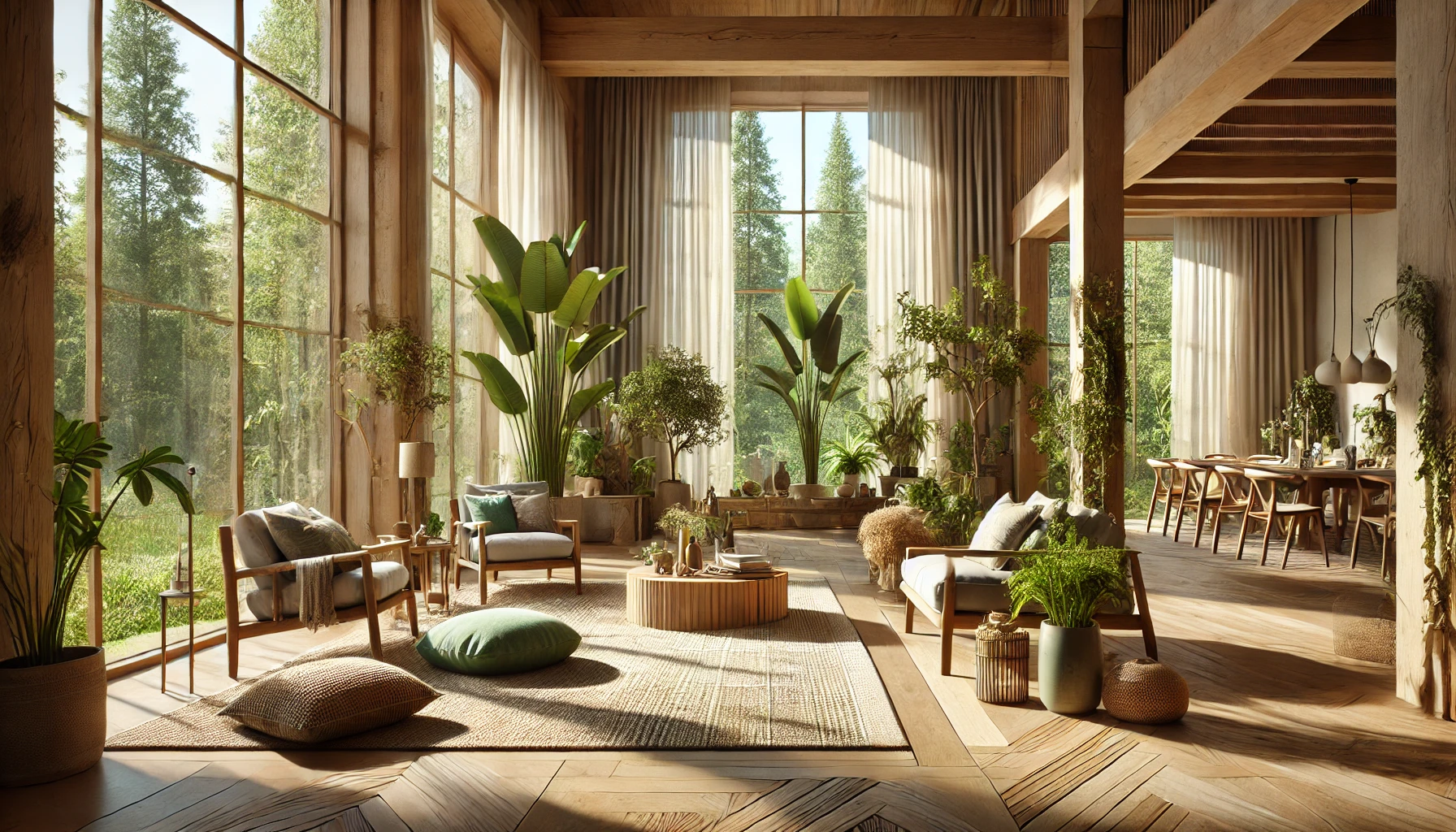
Welcome to the world of nature-inspired home design! As a professional home designer, I am excited to help you bring the tranquility and beauty of nature into your home. Whether you’re looking to create a calming retreat or simply enhance the connection between your indoor and outdoor spaces, nature-inspired design offers countless opportunities for creativity. From the use of natural materials to incorporating eco-friendly elements, this design style focuses on sustainability, serenity, and beauty. In this article, we will explore 15 exciting nature-inspired design ideas that can transform your living space. Whether you’re planning a complete redesign or making small, meaningful changes, these ideas will guide you towards creating a peaceful, stylish, and harmonious home. Let’s embrace the outdoors and bring it inside, one design choice at a time!
Nature-Inspired Home Decor Ideas
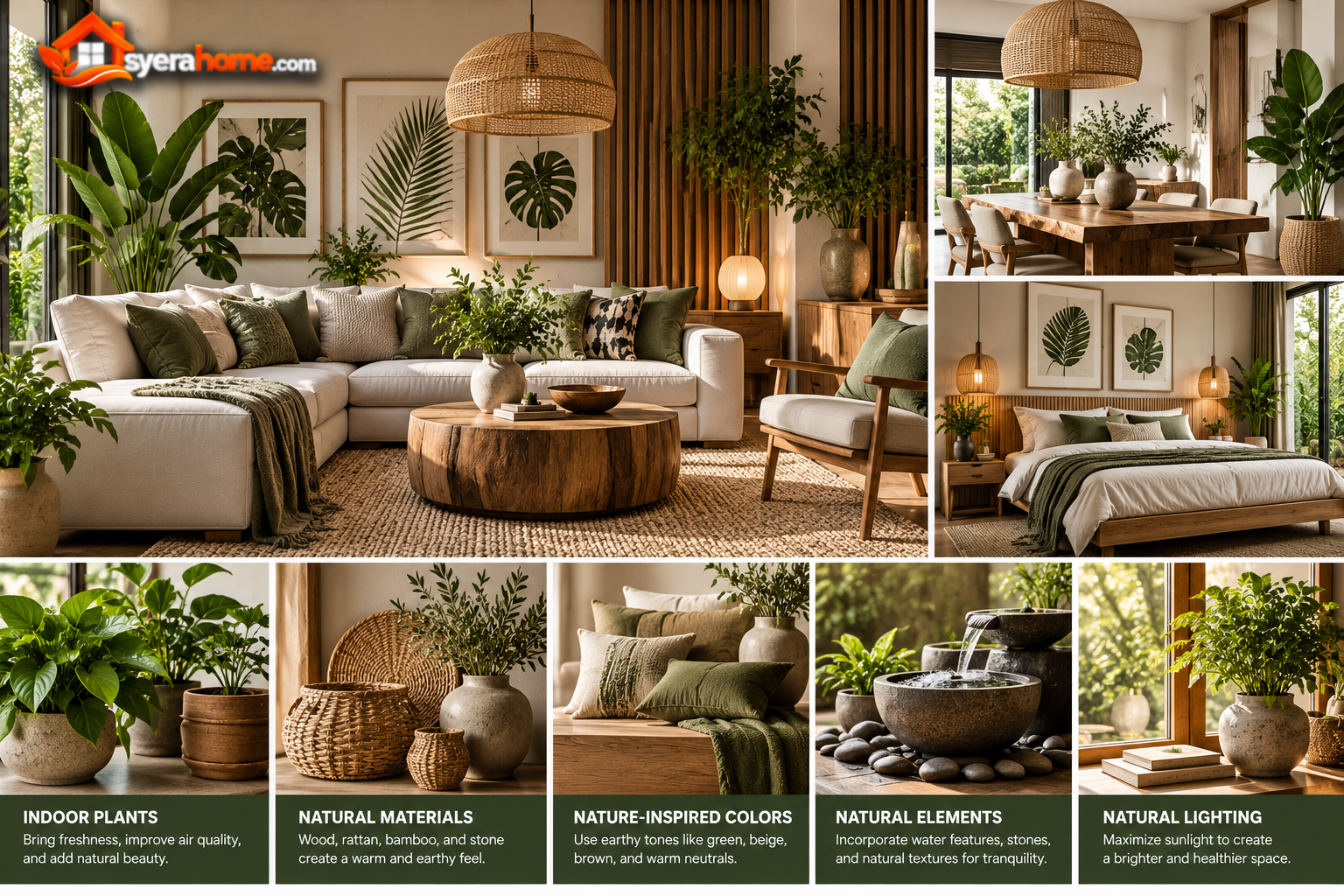 Incorporating Natural Elements into Your Decor
Nature-inspired home decor is all about incorporating elements that reflect the outdoors. Materials like wood, stone, and bamboo add warmth and a sense of calm to any space. Incorporate these elements through furniture, decorative accents, and even flooring to create a serene, organic atmosphere in your home.
One easy way to bring nature indoors is by using decor items made from natural fibers like jute, cotton, or rattan. These materials have a tactile quality that mimics the textures found in nature. You can also enhance your decor with nature-inspired artwork, such as botanical prints or landscape paintings, to add a finishing touch.
Creating a Cohesive Nature-Inspired Look
For a cohesive nature-inspired look, stick to a neutral, earthy color palette. Shades of green, beige, brown, and soft blues work well together to evoke a natural, peaceful environment. Additionally, mix and match different textures like stone, wood, and soft fabrics to create depth and visual interest.
Use indoor plants as decor pieces to add life and vibrancy to your home. Potted plants, hanging planters, and indoor gardens can instantly brighten up any room, bringing in the fresh feel of nature. Their organic shapes and colors enhance the overall nature-inspired aesthetic.
Natural Materials for Home Design
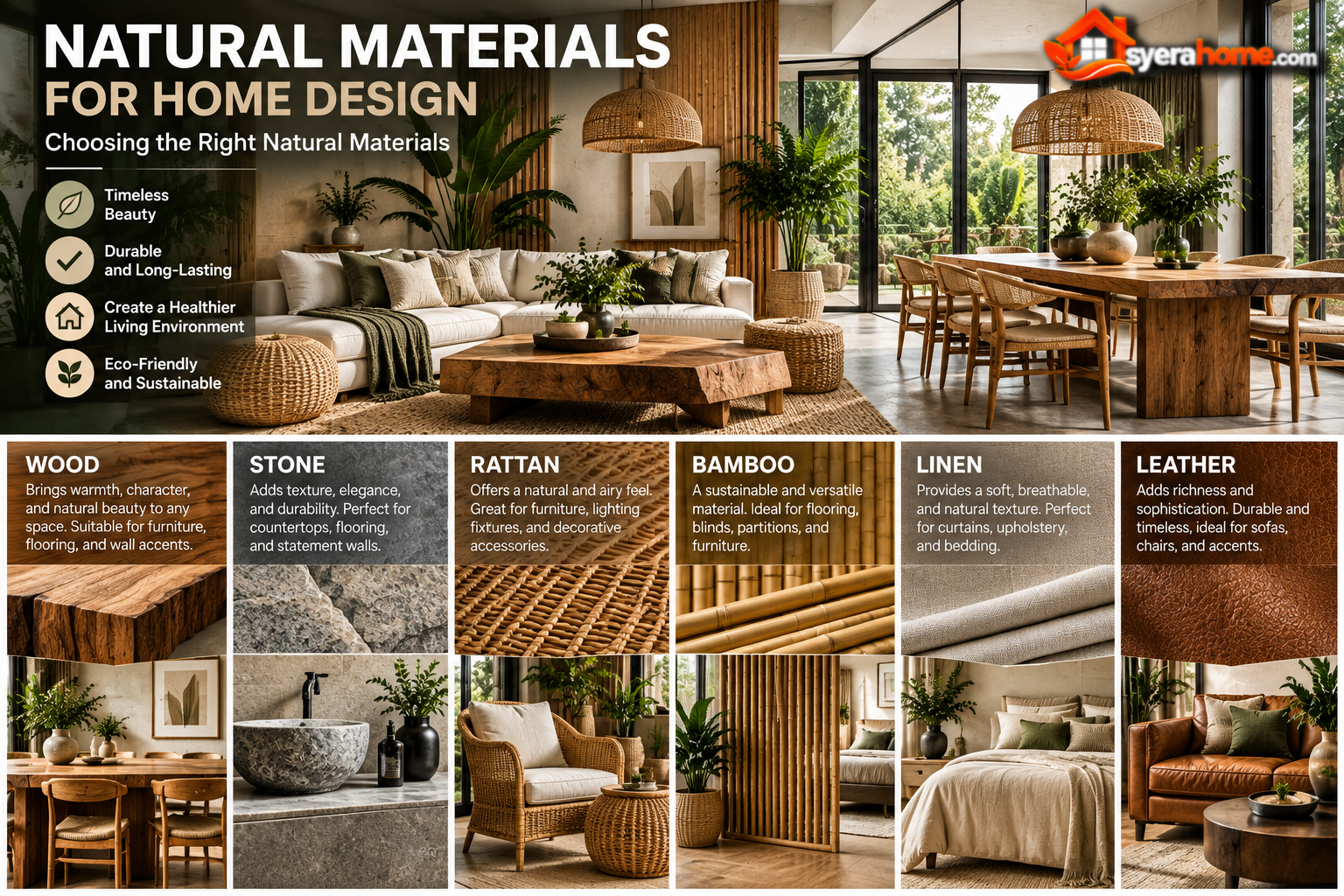 Choosing the Right Natural Materials
Natural materials are at the core of nature-inspired home design. Wood, stone, and clay are excellent options for creating a warm and organic feel in your space. Choose reclaimed wood for flooring or furniture to add character while staying eco-friendly. Stone, whether in the form of countertops or accent walls, provides a raw, earthy texture that adds depth to any room.
Bamboo is another sustainable material that’s perfect for flooring, wall coverings, or even furniture. Its durability and natural beauty make it a favorite in eco-conscious designs. Additionally, cork is a great option for flooring, as it’s soft underfoot, renewable, and offers a unique look.
Incorporating Sustainable Materials
Sustainability is a key element in nature-inspired home design, and selecting eco-friendly materials is essential. Opt for sustainably harvested wood, organic cotton fabrics, and non-toxic paints to reduce your home’s environmental impact. Hemp, cork, and recycled glass are also excellent materials that combine beauty with sustainability.
Using natural materials not only helps the environment but also enhances the connection between your home and the outdoors. These materials have a timeless appeal, allowing you to create a space that feels both modern and grounded in nature.
How to Create a Nature-Inspired Home
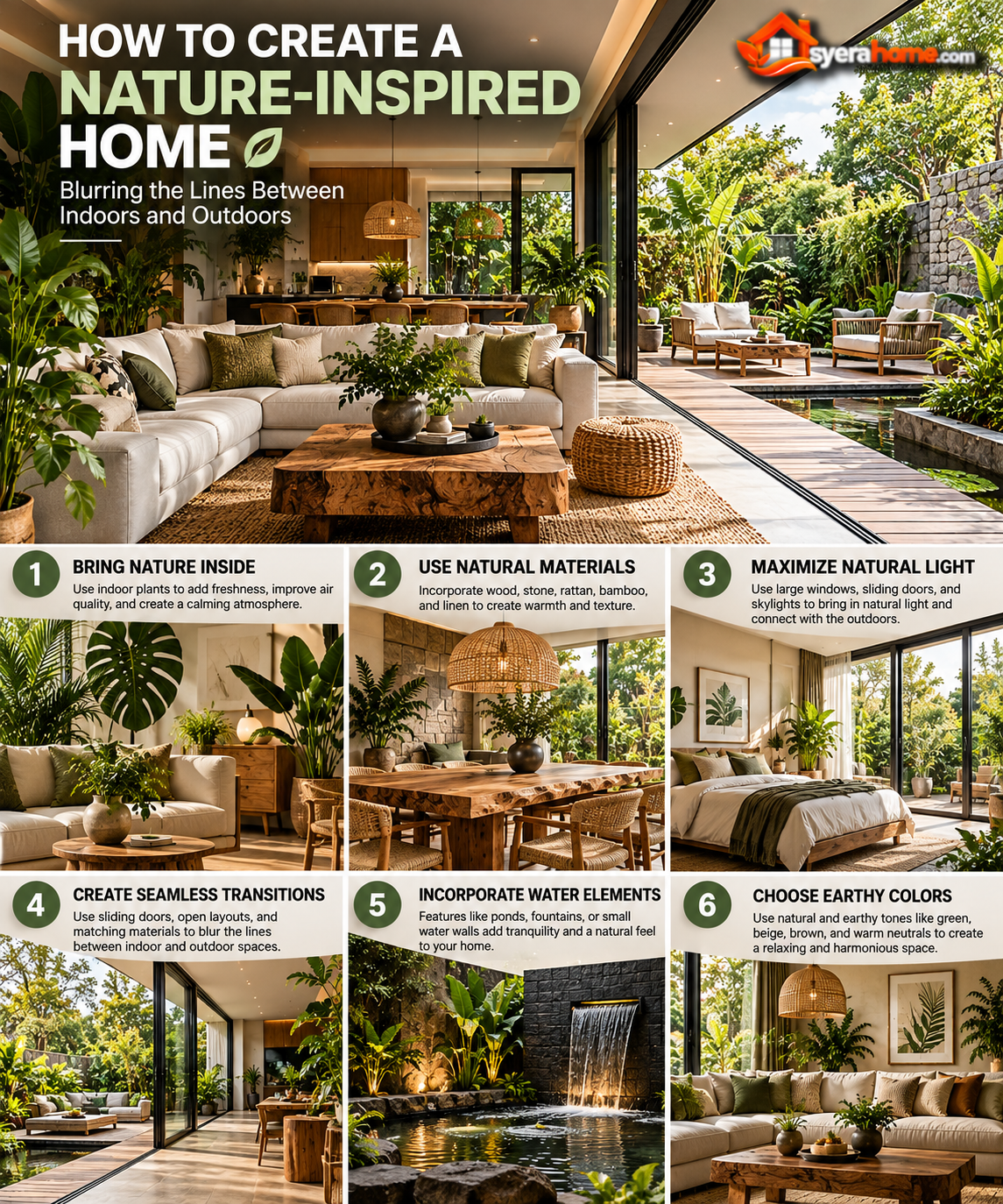 Blurring the Lines Between Indoors and Outdoors
One of the main goals of a nature-inspired home is to blur the lines between indoor and outdoor living spaces. Large windows, sliding glass doors, and skylights can help bring more natural light into your home and offer stunning views of the outdoors. These architectural features create a seamless transition from inside to outside.
Patios, balconies, and gardens can be designed to feel like an extension of your interior living spaces. Use similar materials and colors in both areas to create visual continuity, and add comfortable outdoor furniture to encourage spending time outside.
Bringing the Outdoors In with Indoor Plants
Indoor plants are an essential element of nature-inspired home design. Not only do they improve air quality, but they also bring a natural element into your space. Whether you choose large statement plants like fiddle leaf figs or smaller potted plants, greenery can instantly brighten your home.
Consider creating an indoor garden or even a vertical garden to bring a vibrant, living element into your space. You can also use natural planters made of wood, stone, or ceramic to complement the overall theme of your nature-inspired decor.
Eco-Friendly Home Design Ideas
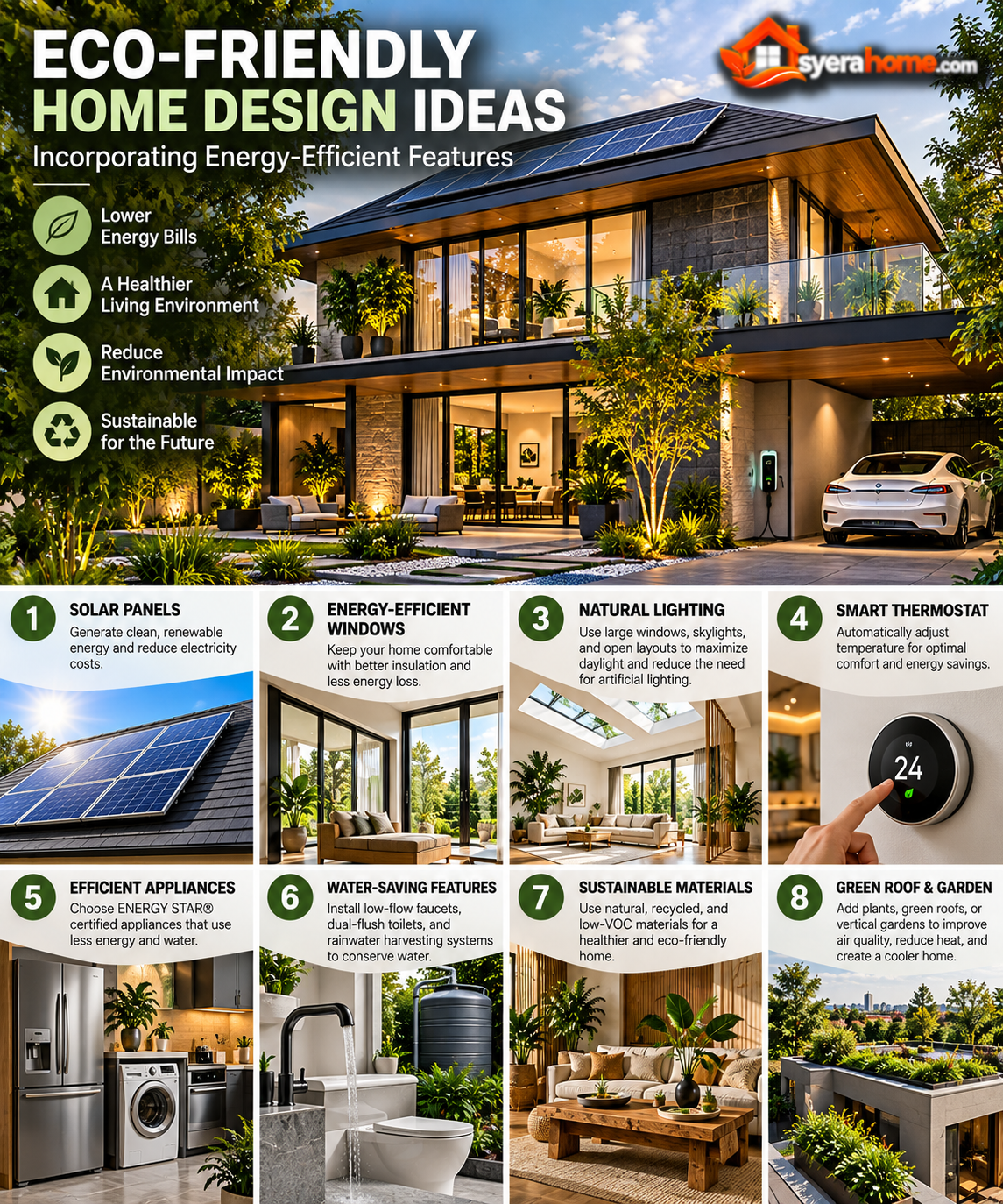 Incorporating Energy-Efficient Features
Eco-friendly home design goes hand-in-hand with nature-inspired design. Incorporate energy-efficient features like LED lighting, solar panels, and energy-saving appliances to reduce your carbon footprint. These features not only help the environment but also lower your energy bills.
Installing double-pane windows and proper insulation can also help maintain a consistent temperature in your home, reducing the need for heating and cooling. These eco-friendly upgrades contribute to a sustainable, energy-efficient home.
Using Recycled and Sustainable Materials
Incorporate recycled materials into your home design to reduce waste and promote sustainability. Recycled glass, reclaimed wood, and upcycled furniture are just a few examples of materials that can be repurposed to create unique, eco-friendly interiors.
In addition to using sustainable materials, consider incorporating eco-friendly finishes like non-toxic paints and sealants. These options not only improve indoor air quality but also contribute to a healthier living environment.
Nature-Themed Interior Design
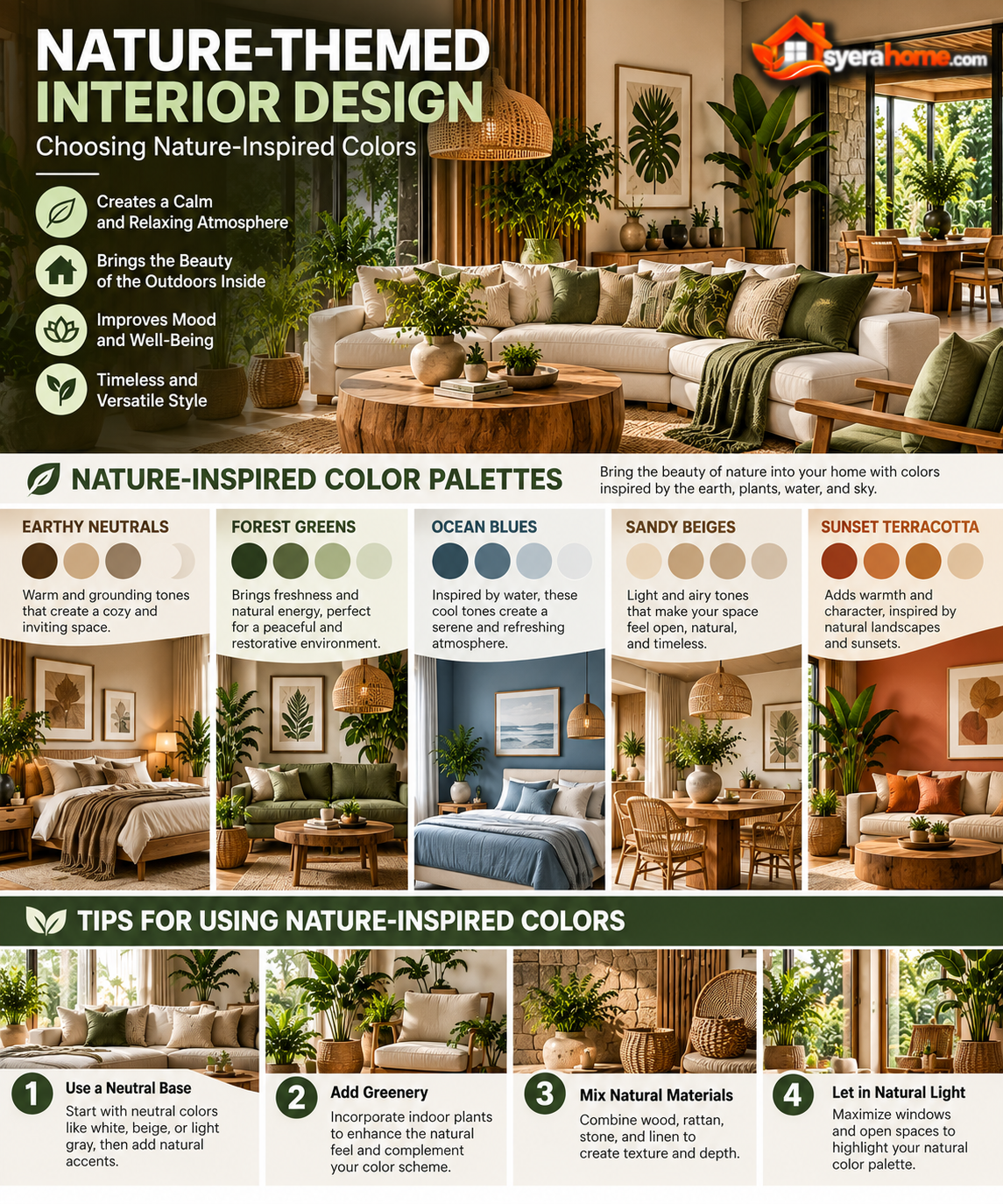 Choosing Nature-Inspired Colors
Nature-themed interior design is all about capturing the colors and textures of the outdoors. Opt for a soothing color palette inspired by nature, such as soft greens, earthy browns, and cool blues. These colors create a calming and serene environment that reflects the beauty of the natural world.
To complement your nature-inspired color scheme, incorporate natural textures like wood, stone, and linen. These materials add warmth and character to your space, enhancing the overall organic feel of the design.
Using Organic Shapes and Textures
Incorporating organic shapes and textures into your interior design adds depth and interest. Curved furniture, natural woodgrain, and stone surfaces mimic the irregular shapes found in nature. These elements create a sense of flow and harmony in your home.
Textured fabrics like linen, wool, and cotton also enhance the tactile quality of your space, making it feel more inviting and comfortable. Use these fabrics for throw pillows, rugs, and curtains to create a cozy, nature-inspired atmosphere.
Biophilic Home Design Tips
What is Biophilic Design?
Biophilic design is a concept that emphasizes the connection between humans and nature in the built environment. It focuses on incorporating natural elements, such as plants, water features, and natural light, to enhance well-being and reduce stress. This design approach is ideal for those looking to create a healthier, more balanced home.
Biophilic design goes beyond aesthetics; it’s about creating spaces that promote a deeper connection with nature. By incorporating natural elements into your home, you can create an environment that supports mental and physical health.
Implementing Biophilic Design in Your Home
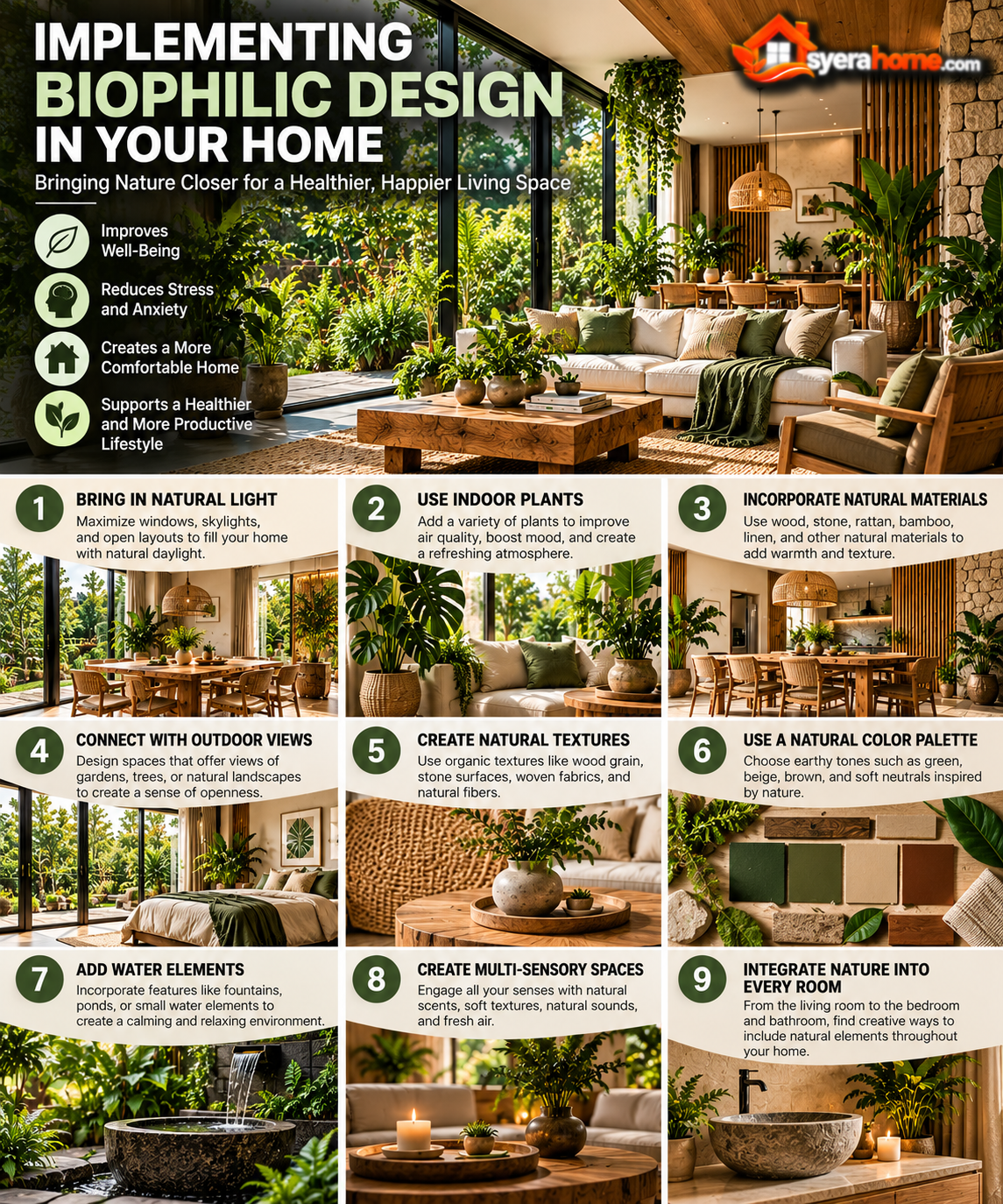 To implement biophilic design in your home, start by incorporating as much natural light as possible. Large windows, skylights, and glass doors can help bring the outdoors in. Additionally, adding indoor plants, water features, and natural materials can create a calming, nature-inspired atmosphere.
Biophilic design also encourages the use of organic shapes and patterns that mimic those found in nature. Incorporate curves and flowing lines into your furniture and decor to enhance the sense of harmony and balance in your home.
Sustainable Home Design with Nature Elements
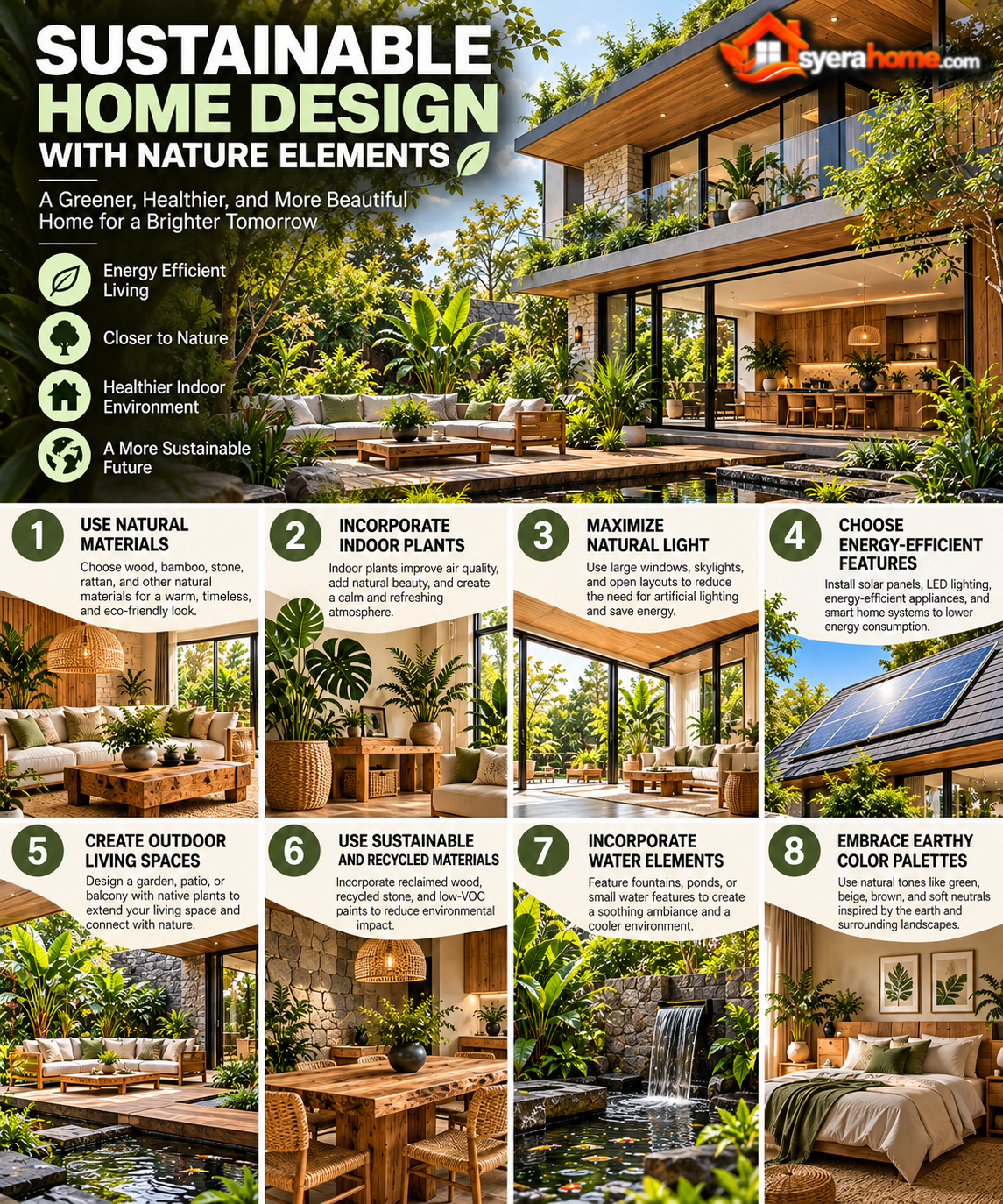 Incorporating Renewable Resources
Sustainable home design focuses on using renewable resources to create eco-friendly living spaces. Materials like bamboo, cork, and reclaimed wood are renewable and have a minimal environmental impact. These materials can be used for flooring, furniture, and decor to create a sustainable and stylish home.
In addition to renewable materials, consider installing energy-efficient appliances and solar panels to reduce your home’s carbon footprint. These sustainable features not only benefit the environment but also enhance the overall design of your home.
Designing for Longevity
When designing a sustainable home, it’s important to choose materials and products that are built to last. Durable materials like stone, metal, and hardwood can withstand the test of time, reducing the need for frequent replacements and renovations.
Investing in high-quality, sustainable materials may have a higher upfront cost, but it will save you money in the long run by reducing maintenance and replacement costs. Additionally, choosing timeless designs ensures that your home will remain stylish and functional for years to come.
Indoor Plants for Nature-Inspired Decor
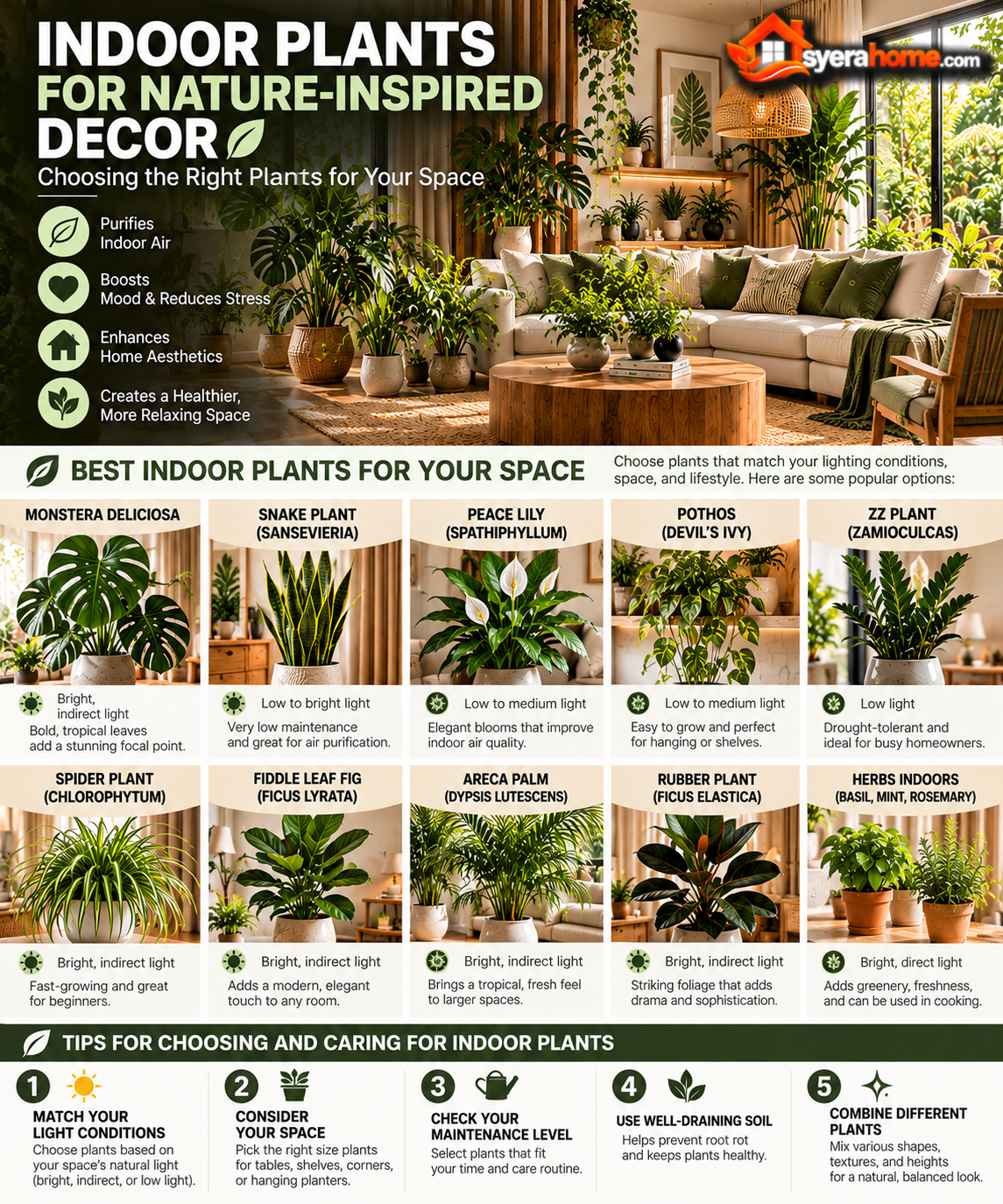 Choosing the Right Plants for Your Space
Indoor plants are a key component of nature-inspired home design. When selecting plants, consider factors like lighting, temperature, and humidity to ensure they thrive in your home. Low-maintenance plants like snake plants, pothos, and ZZ plants are great options for beginners or those with limited time for plant care.
Larger statement plants, like fiddle leaf figs or monstera, can serve as focal points in your living room or dining area. These plants not only enhance the aesthetic of your home but also improve air quality and promote a sense of well-being.
Arranging Plants for Maximum Impact
When arranging indoor plants, consider using a variety of sizes and heights to create visual interest. Group smaller plants together on shelves or tables, while placing larger plants on the floor in decorative pots. This creates a layered, dynamic look that mimics the natural growth patterns found in nature.
Hanging planters and wall-mounted plant shelves are also great options for adding greenery without taking up floor space. These arrangements bring life to your walls and create a more immersive nature-inspired design.
Nature-Inspired Color Palettes for Home
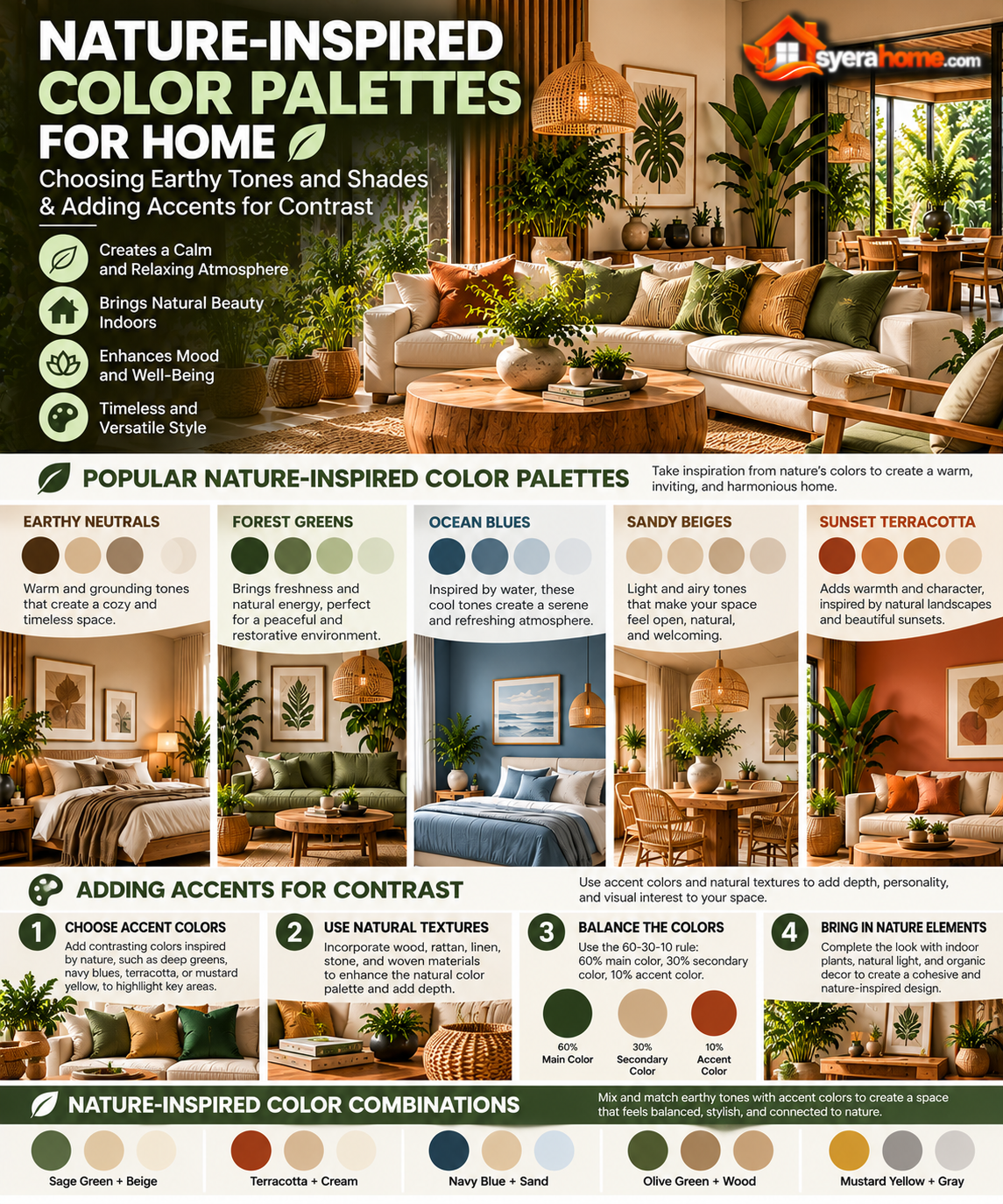 Choosing Earthy Tones and Shades
Earthy tones like soft greens, browns, and beige are the foundation of nature-inspired color palettes. These colors evoke a sense of calm and serenity, making them ideal for creating a peaceful living environment. Incorporating shades of blue or gray can add a touch of coolness and balance to your palette.
These colors work well in any room of the home, from the living room to the bedroom. Whether you choose to paint the walls or add these colors through accessories, earthy tones help establish a cohesive, nature-inspired aesthetic.
Adding Accents for Contrast
While earthy tones are the base of a nature-inspired color palette, adding contrasting accents can bring your design to life. Consider incorporating bolder colors found in nature, like deep greens, burnt oranges, or rich rust tones. These colors can be used for accent walls, throw pillows, or rugs to add a pop of color without overpowering the overall look.
When using contrasting colors, balance is key. Use them sparingly to highlight specific areas of the room while keeping the overall palette soft and neutral. This approach ensures a harmonious, nature-inspired design.
Organic Textures in Home Design
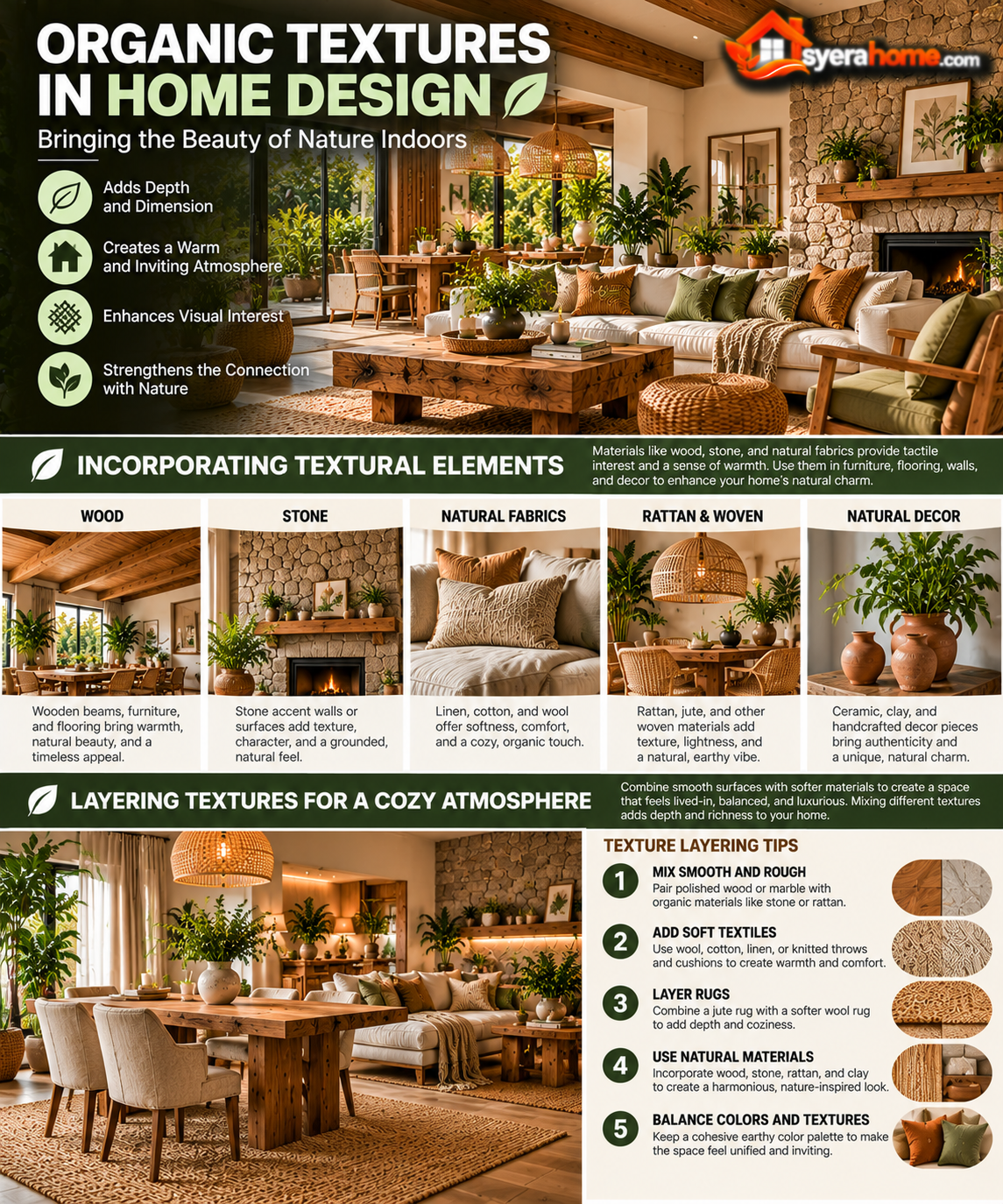 Incorporating Textural Elements
Organic textures add depth and dimension to a nature-inspired home. Materials like wood, stone, and natural fabrics provide tactile interest and a sense of warmth. Whether through furniture, flooring, or decor, these textures enhance the connection between your home and the natural world.
Wooden beams, stone accent walls, and linen upholstery are just a few ways to bring organic textures into your home. These materials not only look beautiful but also feel comforting, making your space more inviting.
Layering Textures for a Cozy Atmosphere
Layering textures is essential for creating a cozy, nature-inspired home. Combine smooth surfaces like polished wood or marble with softer materials like wool, cotton, and jute. This layering effect adds visual interest and makes the space feel more lived-in and welcoming.
For example, you can pair a wooden dining table with linen chairs and a woven jute rug to create a balanced, textured look. Mixing different textures helps create a sense of depth and richness in your home, making it feel both natural and luxurious.
Nature-Inspired Home Architecture
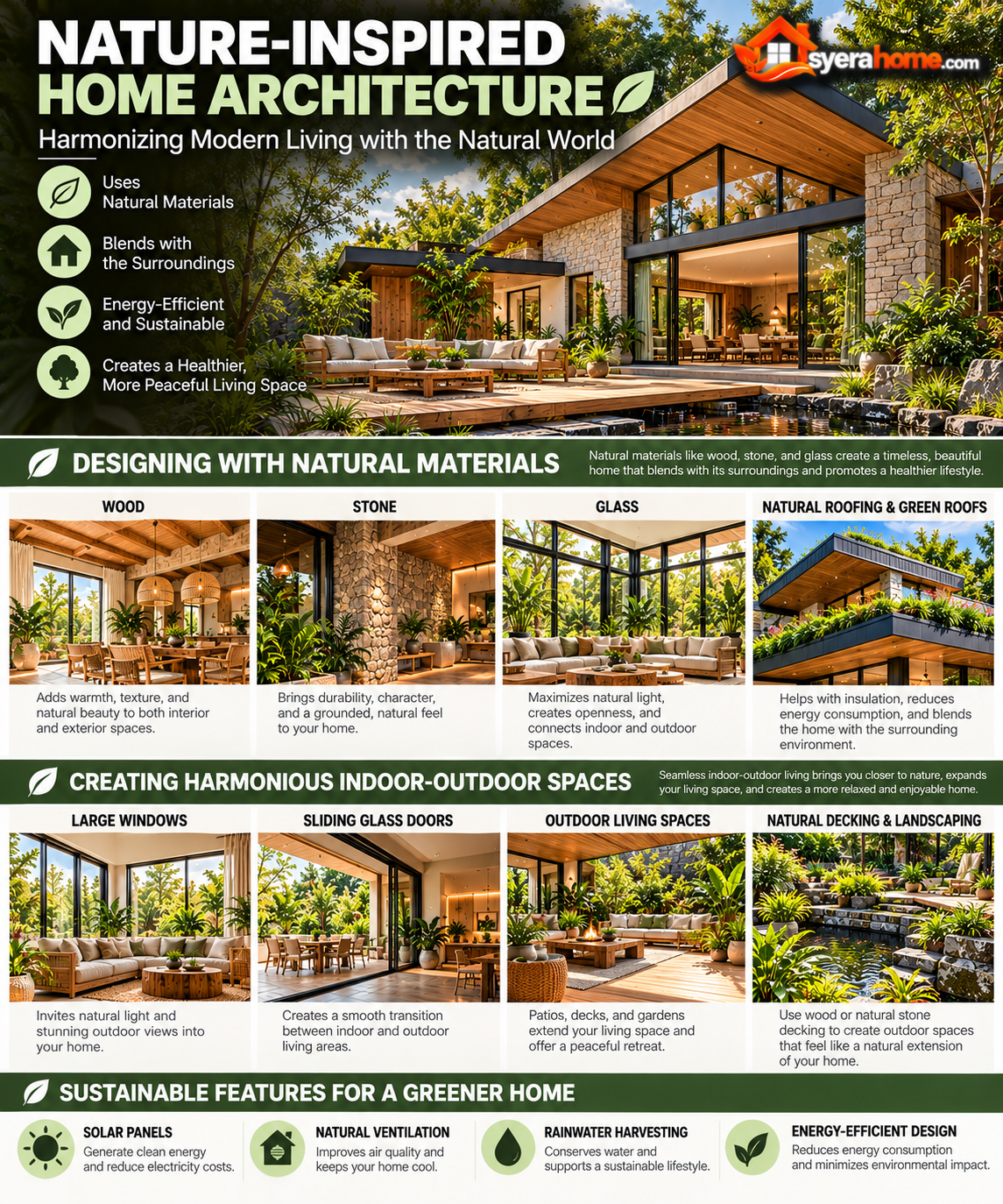 Designing with Natural Materials
Nature-inspired home architecture focuses on using natural materials like wood, stone, and glass to create structures that blend seamlessly with their surroundings. Large windows and open floor plans are key features that allow natural light to flood the space and create a connection with the outdoors.
Incorporating green roofs, solar panels, and natural ventilation systems can further enhance the eco-friendly aspect of your home’s architecture. These sustainable features not only reduce energy consumption but also improve the overall design and functionality of the home.
Creating Harmonious Indoor-Outdoor Spaces
One of the main principles of nature-inspired architecture is creating seamless indoor-outdoor living spaces. Sliding glass doors, large windows, and outdoor patios allow for a smooth transition between the interior and exterior of the home, enhancing the connection to nature.
Use natural stone or wood decking to create outdoor spaces that feel like an extension of your indoor living areas. Whether you’re relaxing on the patio or enjoying a meal outdoors, these spaces provide a calming retreat that brings you closer to nature.
Bringing the Outdoors Into Your Home
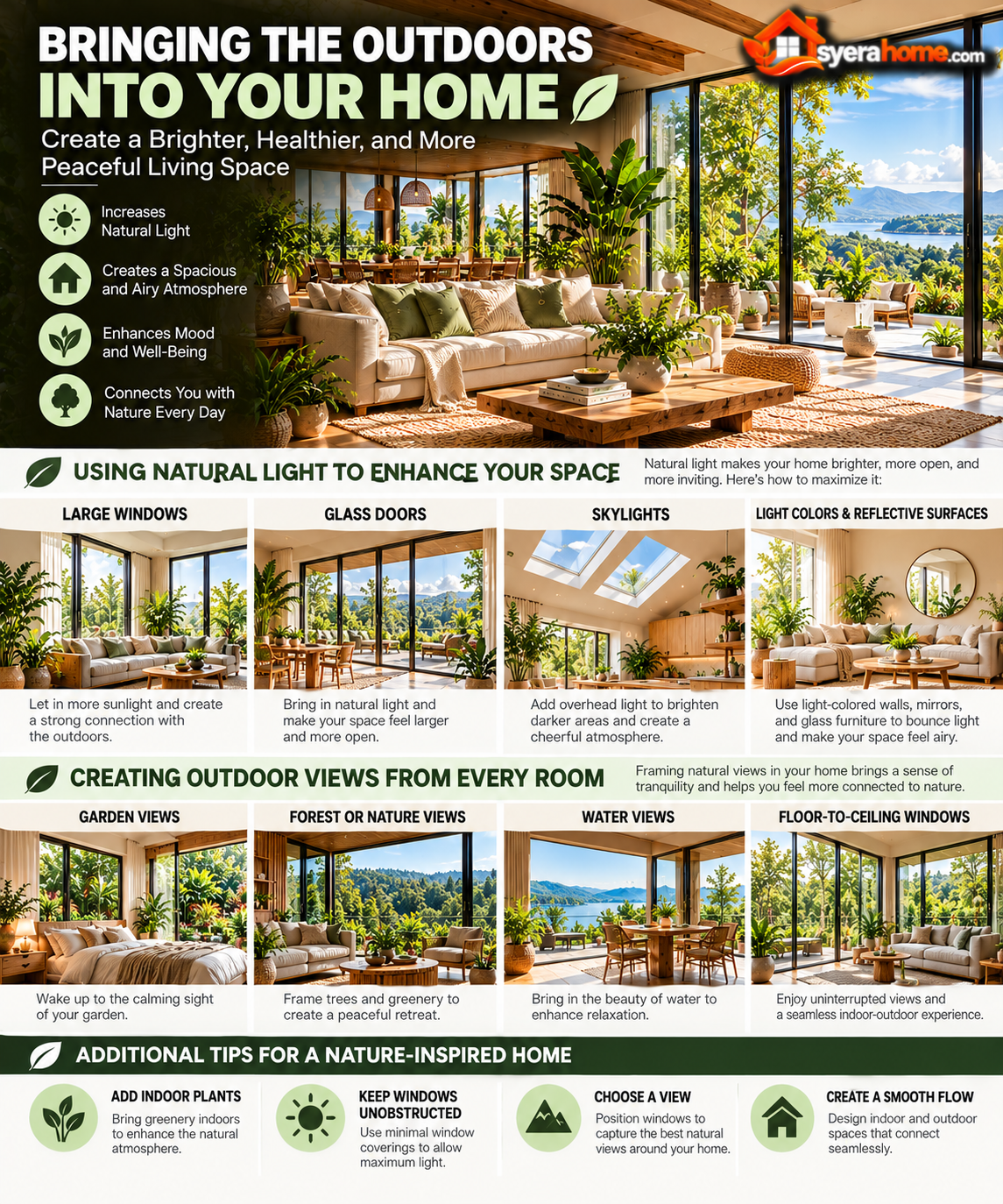 Using Natural Light to Enhance Your Space
Natural light is one of the most effective ways to bring the outdoors into your home. Large windows, glass doors, and skylights can flood your living spaces with sunlight, creating a bright and airy atmosphere. The more natural light you incorporate, the stronger the connection between your indoor and outdoor spaces.
To maximize the effect of natural light, use light-colored walls and reflective surfaces like mirrors or glass furniture. These elements help bounce light around the room, making it feel more open and inviting.
Creating Outdoor Views from Every Room
Positioning windows to capture outdoor views is a key strategy in nature-inspired home design. Whether it’s a view of your garden, a nearby forest, or a body of water, framing these natural elements creates a sense of tranquility and connection with nature.
Consider installing large picture windows or floor-to-ceiling glass doors to create a seamless view of the outdoors. This approach not only enhances the aesthetics of your home but also promotes relaxation and well-being.
Modern Nature-Inspired Home Design
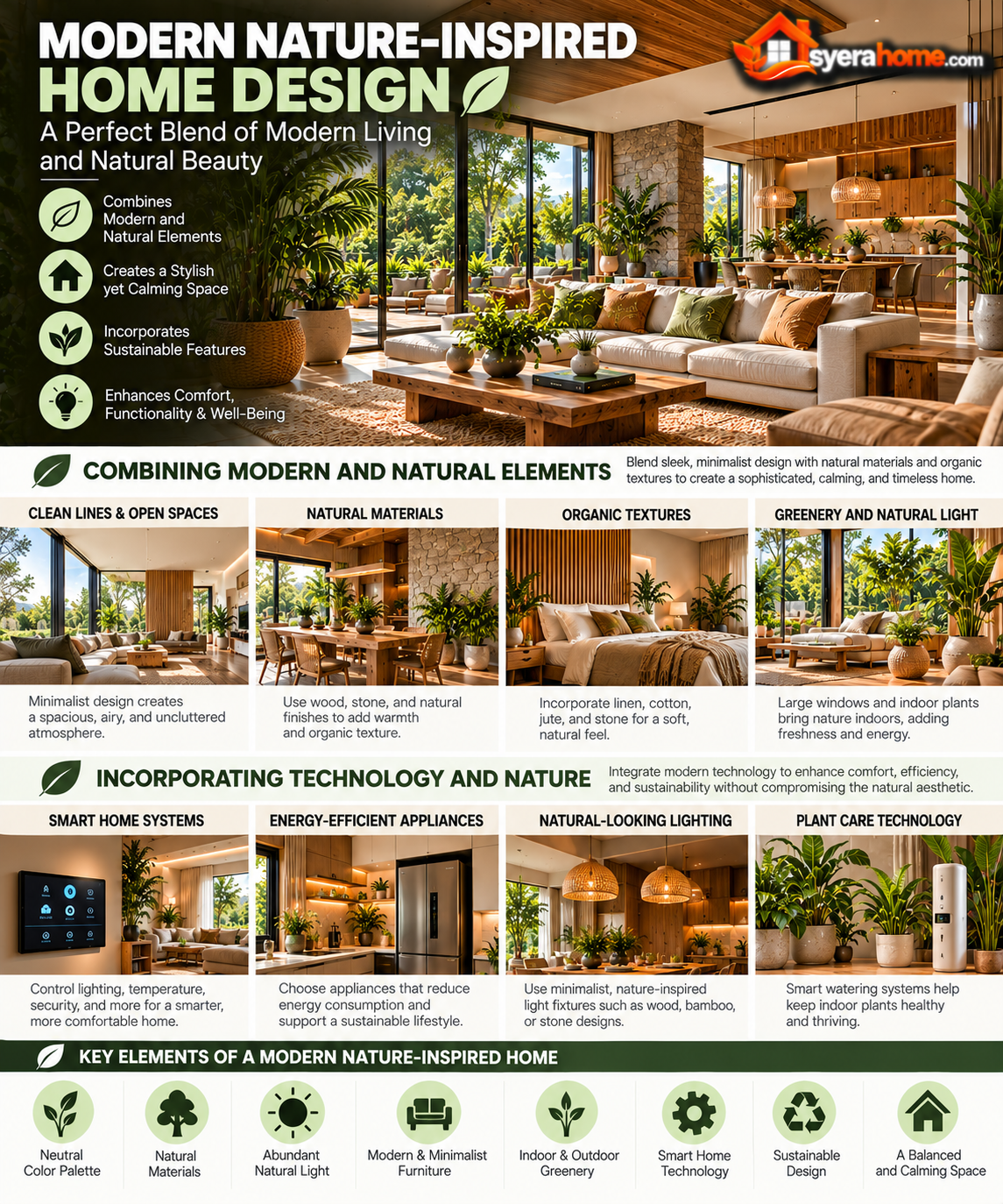 Combining Modern and Natural Elements
Modern nature-inspired home design combines sleek, minimalist elements with natural materials and organic textures. The result is a sophisticated and calming environment that balances modern luxury with the beauty of nature. In this design style, you can incorporate clean lines, open spaces, and natural light while using wood, stone, and greenery to soften the overall look.
Use modern furniture with simple shapes and natural finishes to maintain a cohesive design. Neutral color schemes with pops of greenery add freshness and energy to modern nature-inspired interiors.
Incorporating Technology and Nature
Technology can be seamlessly integrated into a modern nature-inspired home. Smart home systems, energy-efficient appliances, and LED lighting can enhance the functionality of your home without detracting from its natural beauty. Choose technology that complements the overall aesthetic, such as minimalist light fixtures or built-in speakers that blend into the walls.
Additionally, technology can be used to control lighting, temperature, and even watering systems for indoor plants. These features not only make your home more efficient but also support a sustainable and nature-inspired lifestyle.
Green Living in Home Design
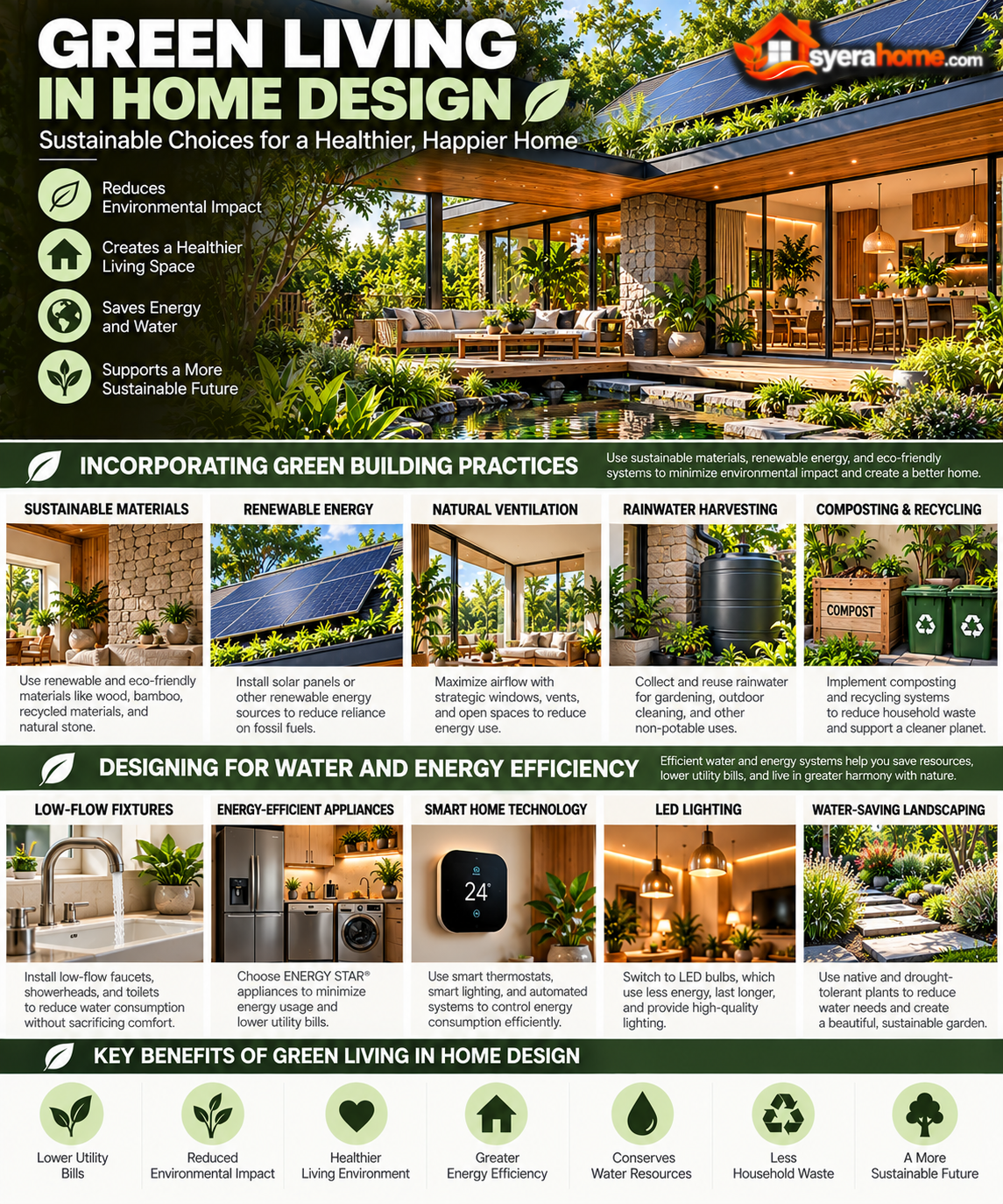 Incorporating Green Building Practices
Green living in home design focuses on creating eco-friendly, energy-efficient homes that minimize environmental impact. Using sustainable materials, incorporating renewable energy sources like solar panels, and installing energy-efficient appliances are just a few ways to embrace green living in your home.
Additionally, implementing green building practices like rainwater harvesting, composting, and recycling systems can further enhance your home’s sustainability. These practices not only benefit the environment but also create a healthier and more cost-efficient living space.
Designing for Water and Energy Efficiency
Water and energy efficiency are key components of green living. Install low-flow faucets and showerheads to reduce water consumption, and choose energy-efficient appliances to minimize energy usage. Smart thermostats and LED lighting can also help control energy consumption and lower your utility bills.
Consider installing rain barrels to collect and reuse rainwater for gardening or outdoor cleaning. These small changes contribute to a more sustainable home and help you live in harmony with nature.
Nature-Inspired Furniture Ideas
Choosing Furniture Made from Natural Materials
When selecting furniture for a nature-inspired home, opt for pieces made from natural materials like wood, bamboo, and rattan. These materials have a timeless appeal and blend seamlessly with the organic textures of your space. Solid wood tables, rattan chairs, and bamboo shelving units are just a few examples of furniture that enhances the natural aesthetic.
In addition to wood and bamboo, consider furniture made from stone, metal, or woven materials. These options add texture and contrast to your design, creating a harmonious balance between modern and natural elements.
Incorporating Organic Shapes and Designs
Organic shapes and flowing lines are key features of nature-inspired furniture. Choose furniture with curved edges, soft silhouettes, and natural finishes to create a sense of harmony in your home. These shapes mimic the irregular forms found in nature and enhance the overall aesthetic of the space.
Pair organic-shaped furniture with soft textiles like wool, linen, or cotton to create a comfortable and inviting atmosphere. The combination of natural materials and organic shapes brings a sense of balance and serenity to your home.
Incorporating nature-inspired design into your home is a powerful way to create a serene and harmonious living space. By using natural materials, incorporating eco-friendly practices, and bringing the outdoors inside, you can transform your home into a calming retreat that reflects the beauty of the natural world. Whether you’re planning a complete redesign or making small changes, nature-inspired design offers endless possibilities for creativity and connection with the environment.
It’s time to embrace the tranquility of nature and bring it into your home. Whether you’re drawn to the organic textures, calming colors, or sustainable elements, nature-inspired design can transform your living space and enhance your overall well-being. Start your journey towards a more peaceful and beautiful home today with the tips and ideas provided in this guide.
If you’re ready to create a nature-inspired home that reflects your personal style and values, now is the perfect time to take action. As a professional home designer, I am here to guide you through the process of transforming your home into a space that feels connected to nature, sustainable, and serene. Don’t wait—contact us today for a consultation, and let’s bring the beauty of the natural world into your home.
With our expertise, you can achieve a nature-inspired home that not only looks stunning but also supports a healthy and eco-friendly lifestyle. Whether you’re interested in a full home renovation or a simple decor refresh, we can help you design a space that brings harmony, beauty, and sustainability into your everyday life. Click the link below to get started and take the first step toward creating your dream nature-inspired home.
F.A.Q: Nature-inspired home design
What are the key elements of nature-inspired home design?
The key elements of nature-inspired home design include the use of natural materials like wood and stone, earthy color palettes, indoor plants, and sustainable, eco-friendly practices. These elements create a calming and organic environment that mirrors the natural world.
How can I make my home feel more connected to nature?
You can make your home feel more connected to nature by incorporating natural materials, using large windows for natural light, adding indoor plants, and using earthy colors like greens, browns, and soft neutrals to create a calming, nature-like atmosphere.
What are some affordable ways to add nature-inspired decor to my home?
Affordable ways to add nature-inspired decor include using indoor plants, adding natural fiber textiles like jute or cotton, incorporating wooden furniture, and using eco-friendly paints and finishes. Recycled or upcycled materials are also cost-effective and sustainable options.
How do I choose the right plants for a nature-inspired home?
Choose plants that suit your home’s light and humidity conditions. Low-maintenance plants like snake plants, pothos, and ferns are ideal for indoor spaces. You can also consider larger statement plants like fiddle leaf figs or rubber plants to create focal points.
What are the best colors for a nature-inspired home?
The best colors for a nature-inspired home include earthy tones such as greens, browns, beiges, and soft blues. These colors reflect natural landscapes and create a serene, calming environment. Accent colors like deep forest green or warm terracotta can add depth to the design.
How can I bring the outdoors into my home?
You can bring the outdoors into your home by incorporating large windows, using natural materials like wood, stone, and bamboo, and adding indoor plants. You can also use organic shapes and textures in furniture and decor to reflect the beauty of nature.
What sustainable materials are best for nature-inspired design?
Sustainable materials for nature-inspired design include bamboo, reclaimed wood, cork, organic cotton, and recycled glass. These materials are eco-friendly, renewable, and help reduce the environmental impact of home design.
How does biophilic design enhance a home?
Biophilic design enhances a home by incorporating natural elements such as plants, water features, and natural light. This design approach promotes well-being, reduces stress, and improves air quality by connecting the indoor environment with nature.
What are some examples of nature-inspired furniture?
Nature-inspired furniture includes pieces made from natural materials like wood, rattan, or bamboo. Examples include wooden coffee tables, rattan chairs, and stone countertops. Furniture with organic shapes and textures also complements nature-inspired design.
How can I create a nature-inspired bedroom?
To create a nature-inspired bedroom, use soft, earthy colors like greens and browns, incorporate natural materials like wooden bed frames or bamboo blinds, and add indoor plants for a calming effect. Organic bedding made from cotton or linen enhances the natural atmosphere.
Can I incorporate nature-inspired design in a modern home?
Yes, nature-inspired design can be incorporated into a modern home by blending sleek, minimalist elements with natural materials like wood and stone. You can also use indoor plants and large windows to bring in natural light and create a harmonious balance between modern and natural aesthetics.
How can I use natural light effectively in nature-inspired home design?
Maximize natural light by using large windows, skylights, and glass doors to let sunlight flood your home. Light-colored walls and reflective surfaces, such as mirrors, can help bounce light around the space, enhancing the bright and open feel of your nature-inspired design.
What role do textures play in nature-inspired home design?
Textures play a crucial role in nature-inspired home design by adding depth and warmth to a space. Organic textures like wood grain, stone, and natural fabrics create a tactile connection to nature, making the home feel more inviting and grounded.
How do I maintain an eco-friendly home design?
Maintain an eco-friendly home design by using energy-efficient appliances, sustainable materials like reclaimed wood or bamboo, and water-saving fixtures. You can also use non-toxic paints and finishes, compost, and recycle to reduce waste and lower your environmental footprint.
What are some nature-inspired home accessories?
Nature-inspired home accessories include wooden bowls, ceramic vases, woven baskets, and natural fiber rugs. Other options include botanical artwork, stone sculptures, and eco-friendly candles. These accessories enhance the organic feel of your home while complementing the overall design.